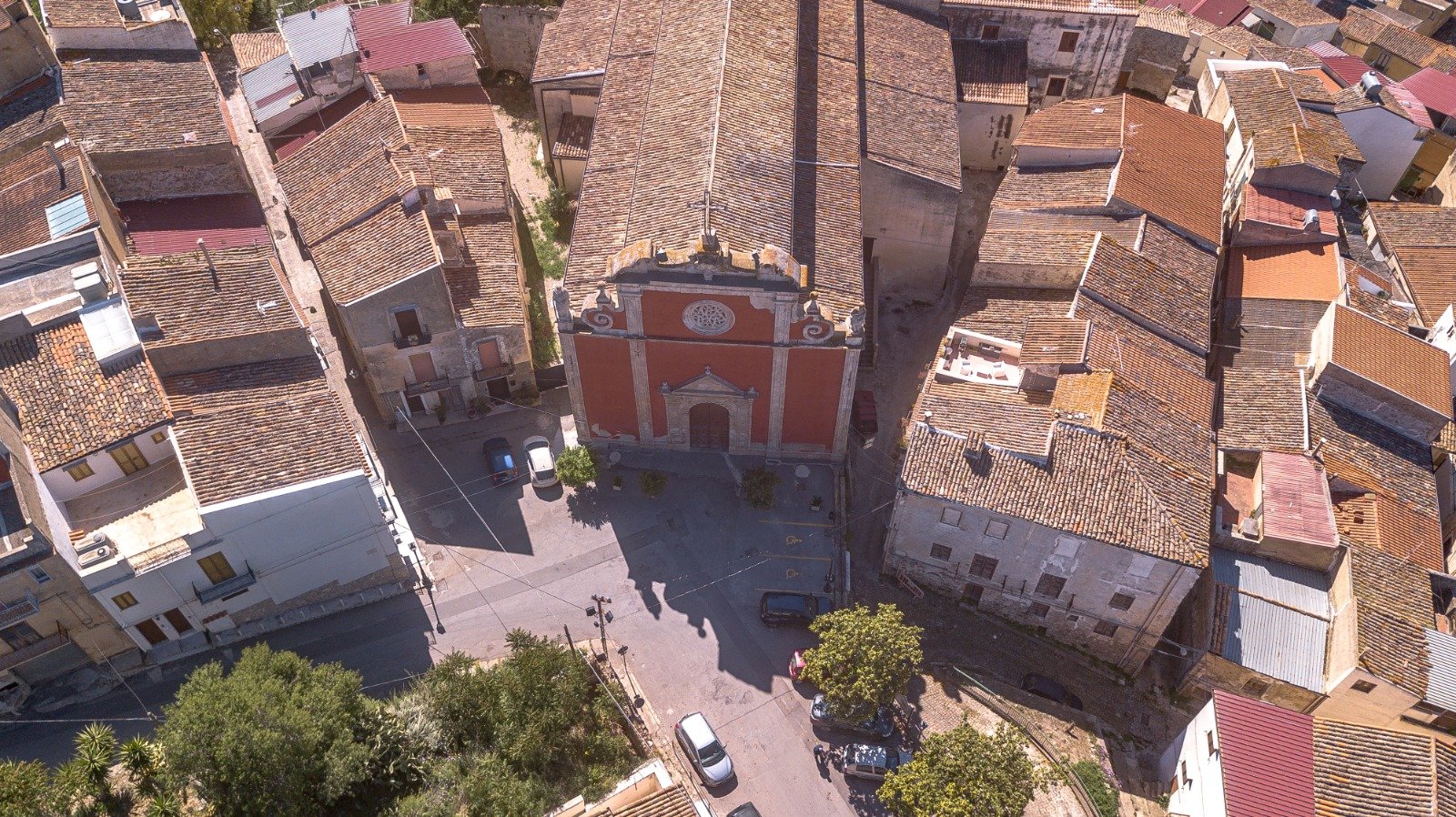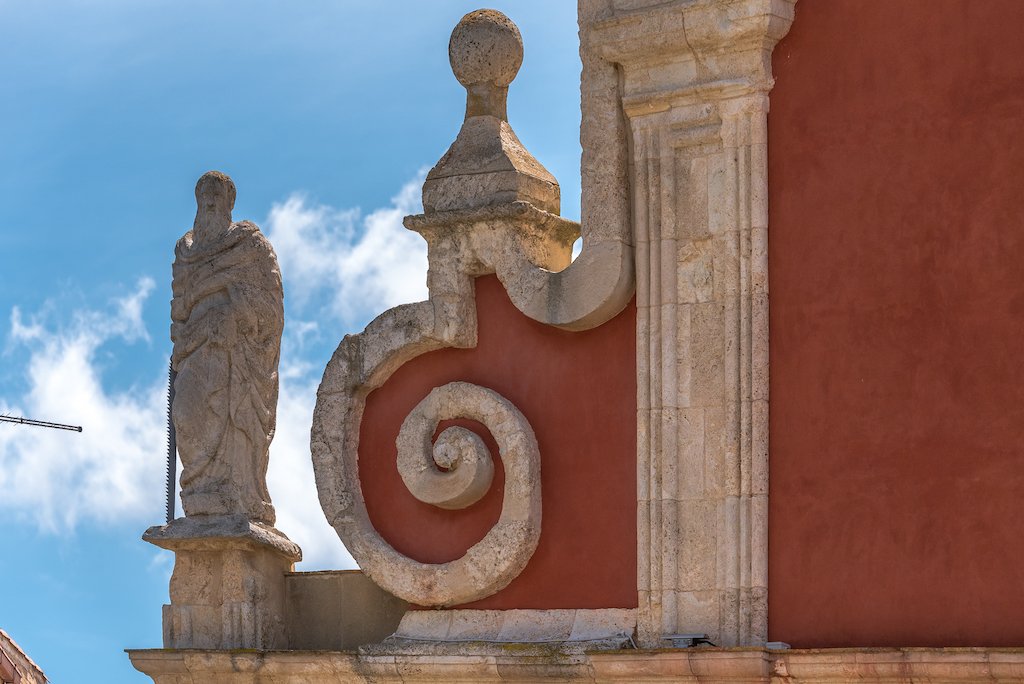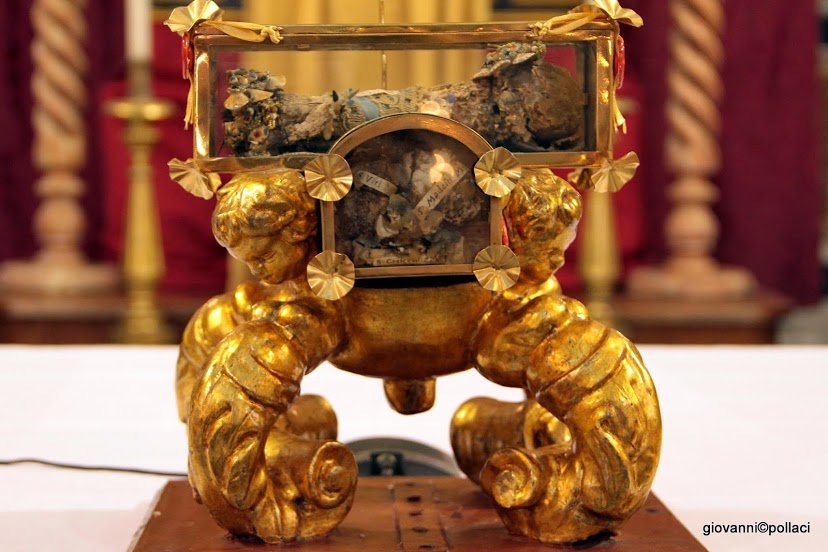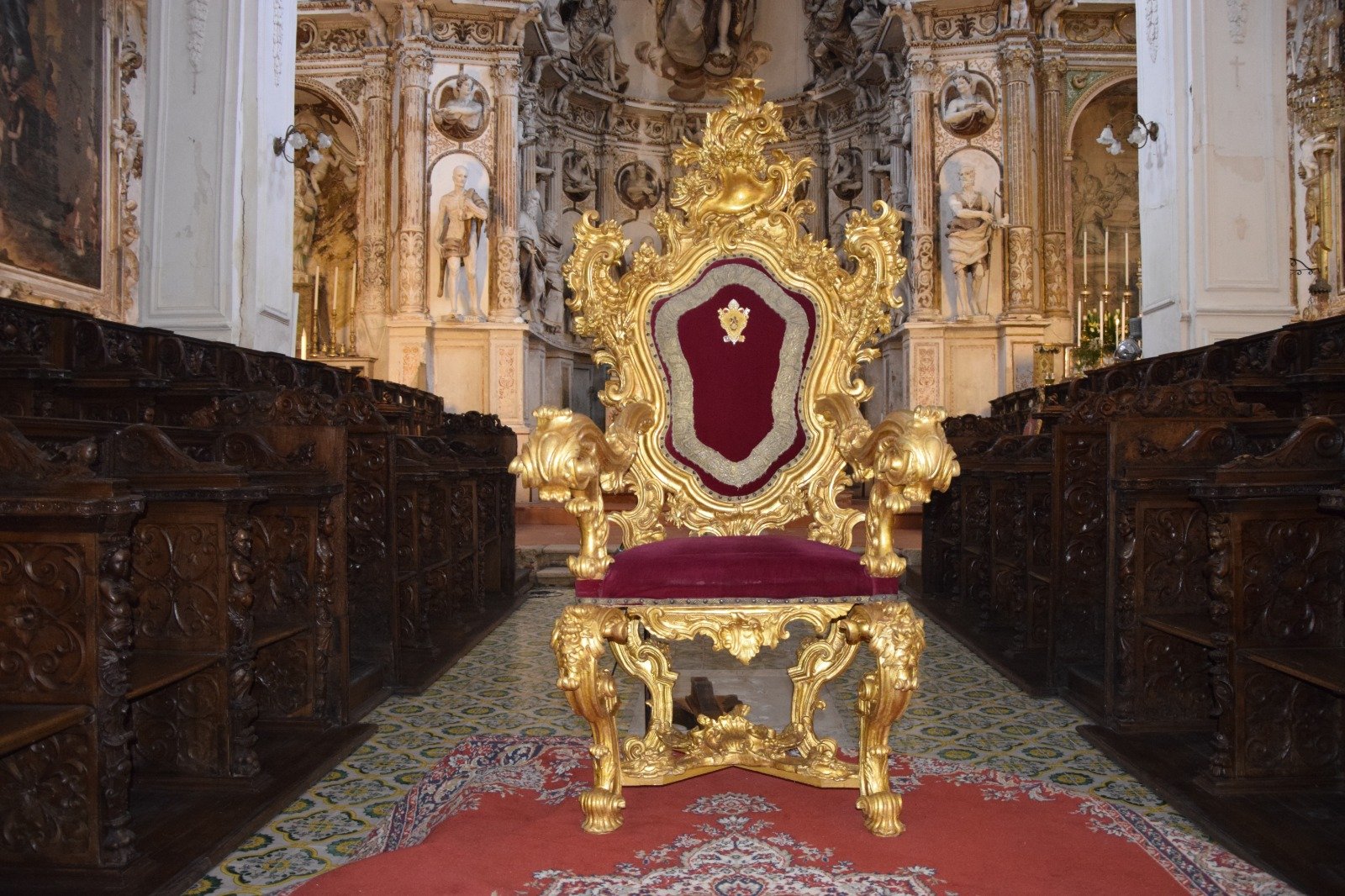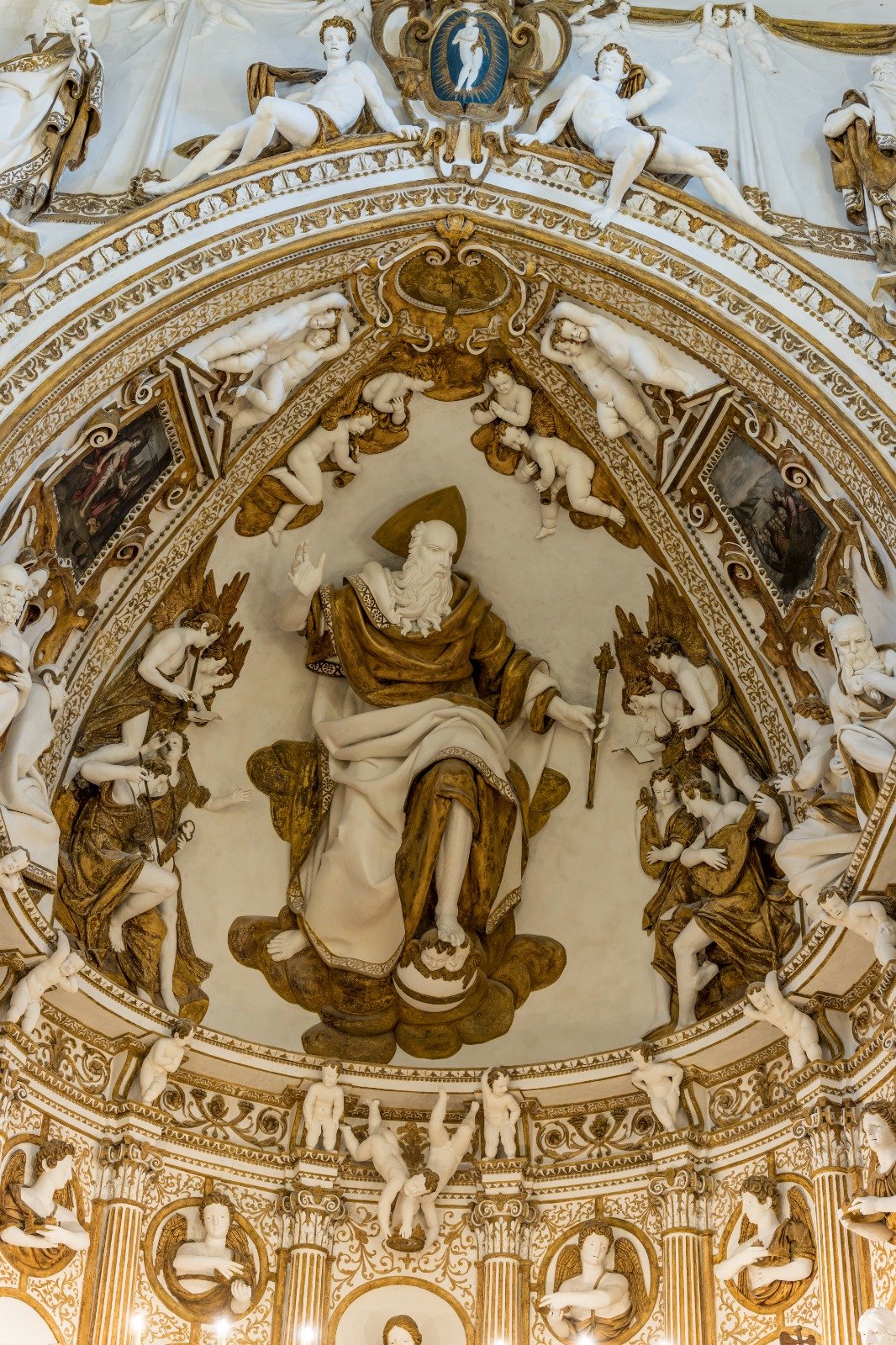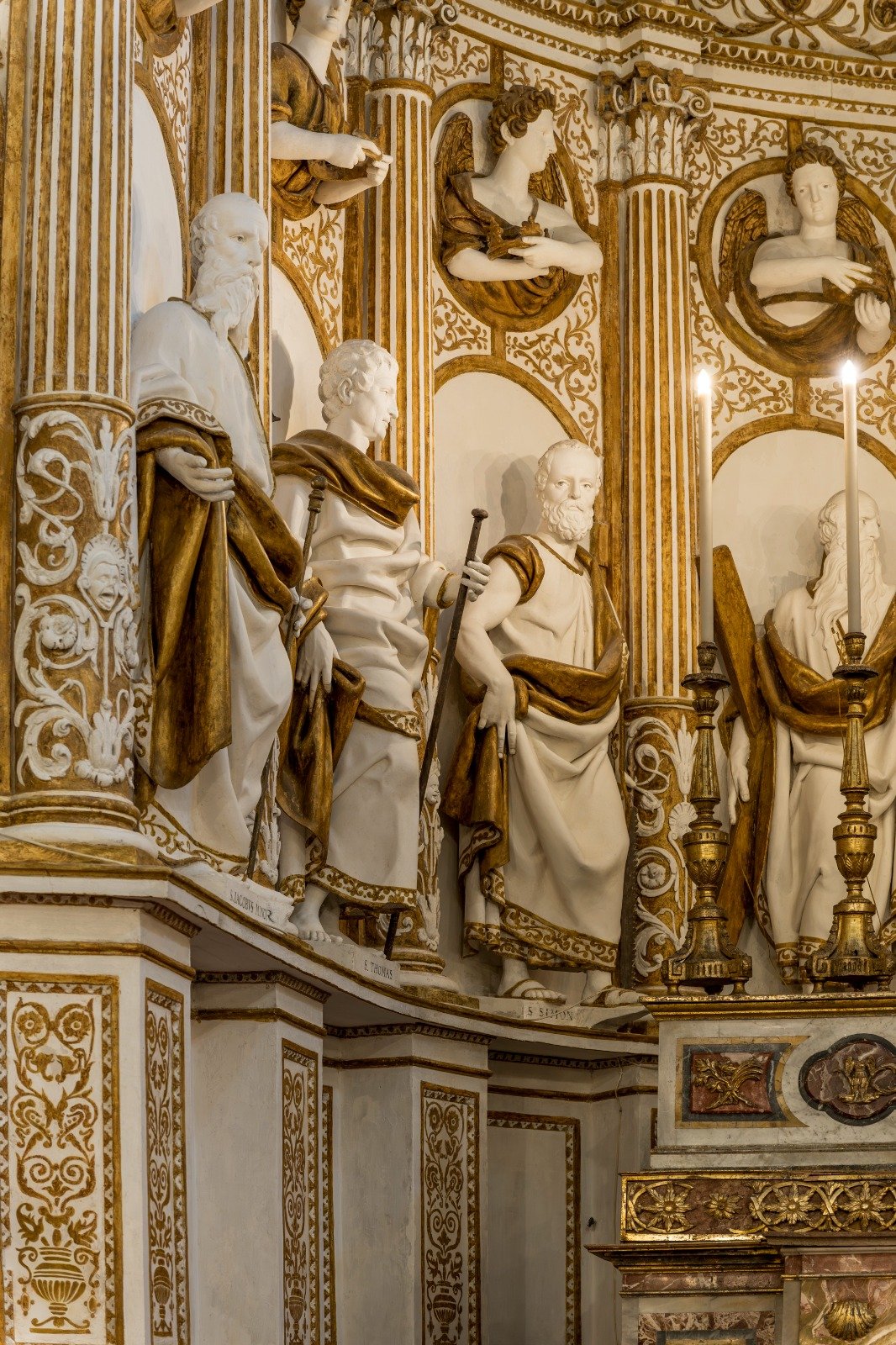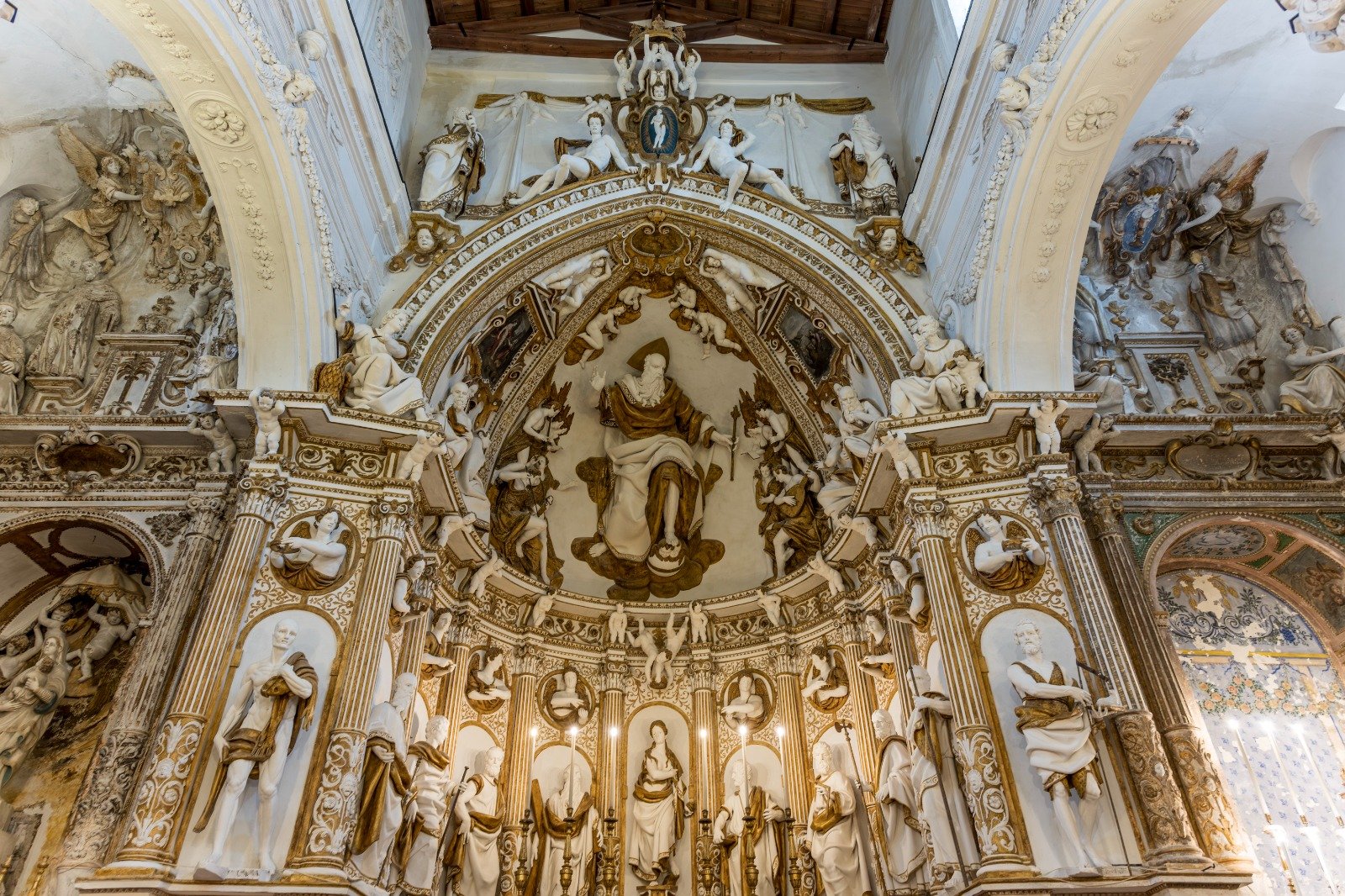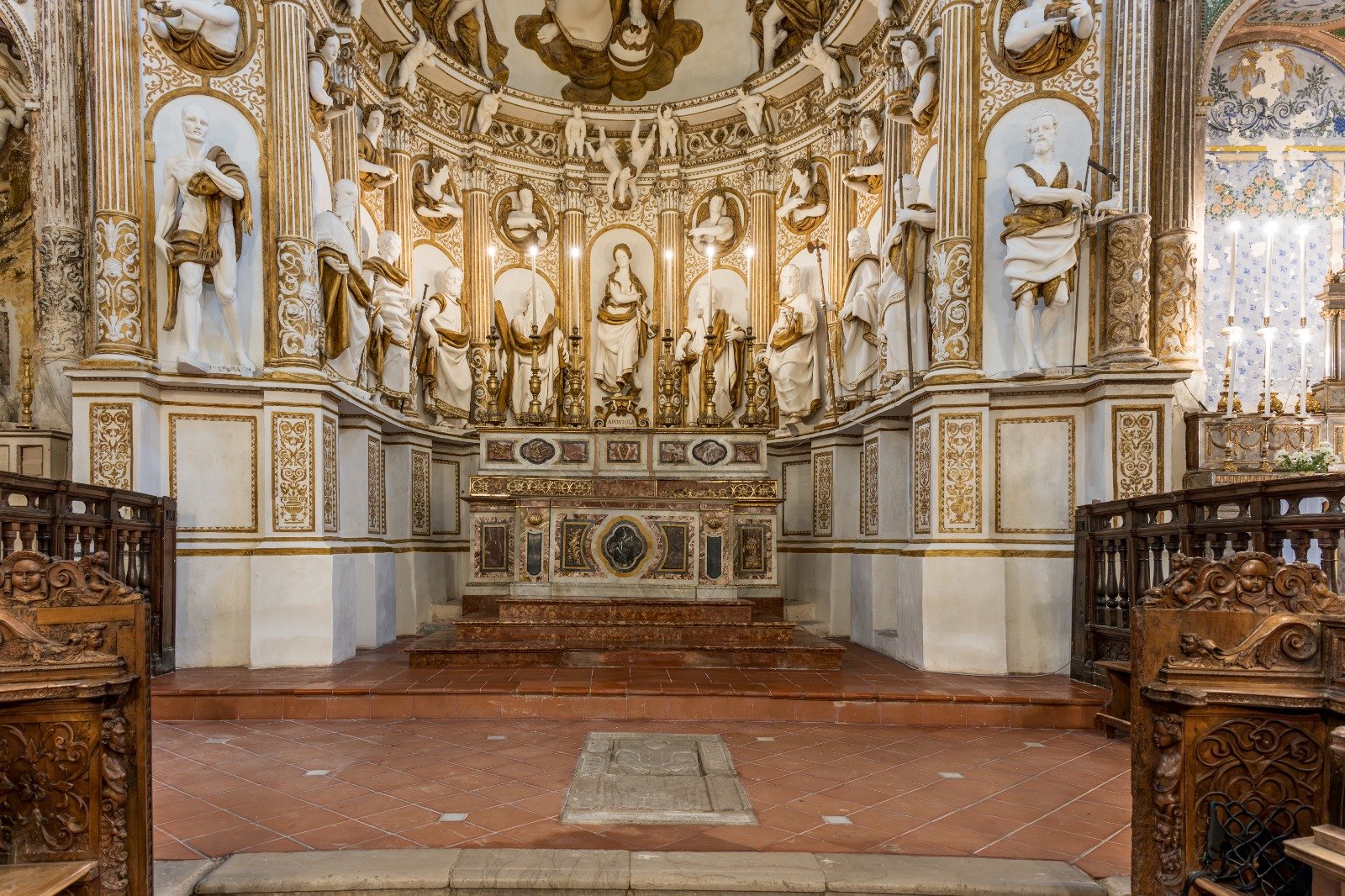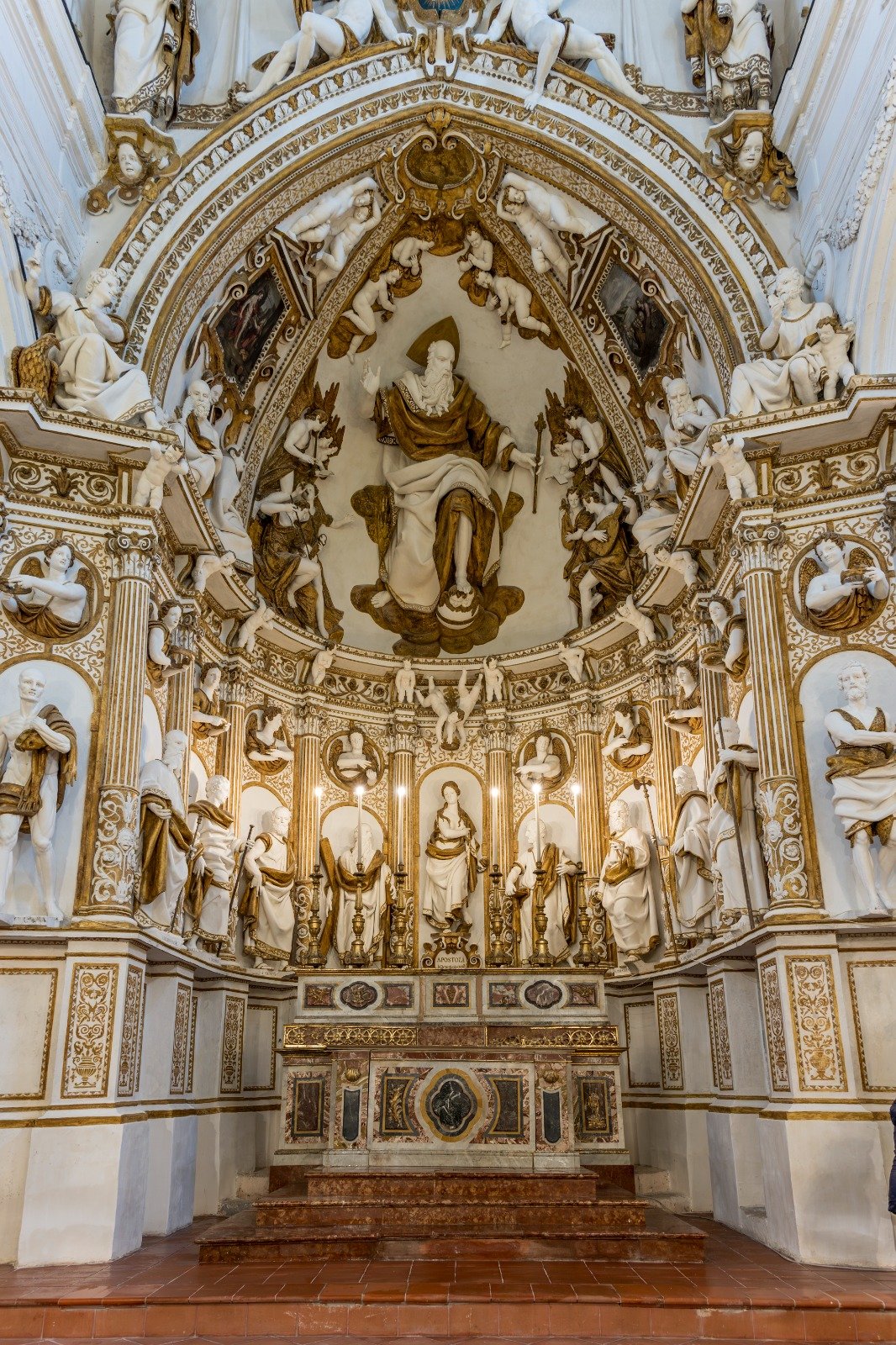

A church serving as the Mother Church already existed in 1230, but it was destroyed together with the castle in 1326 during an Angevin raid. The present church was built in 1350 at the request of Count Matteo Sclafani, near the new castle, and became the parish church in 1449. Between the late 15th and early 16th centuries, it was enlarged and given its present-day form. The interior is divided into three naves by two rows of circular pillars.
In 1723, the central nave, the columns, the capitals, and the main arch were decorated with stucco by the master stucco artist Vincenzo Messina.
Inside the Church
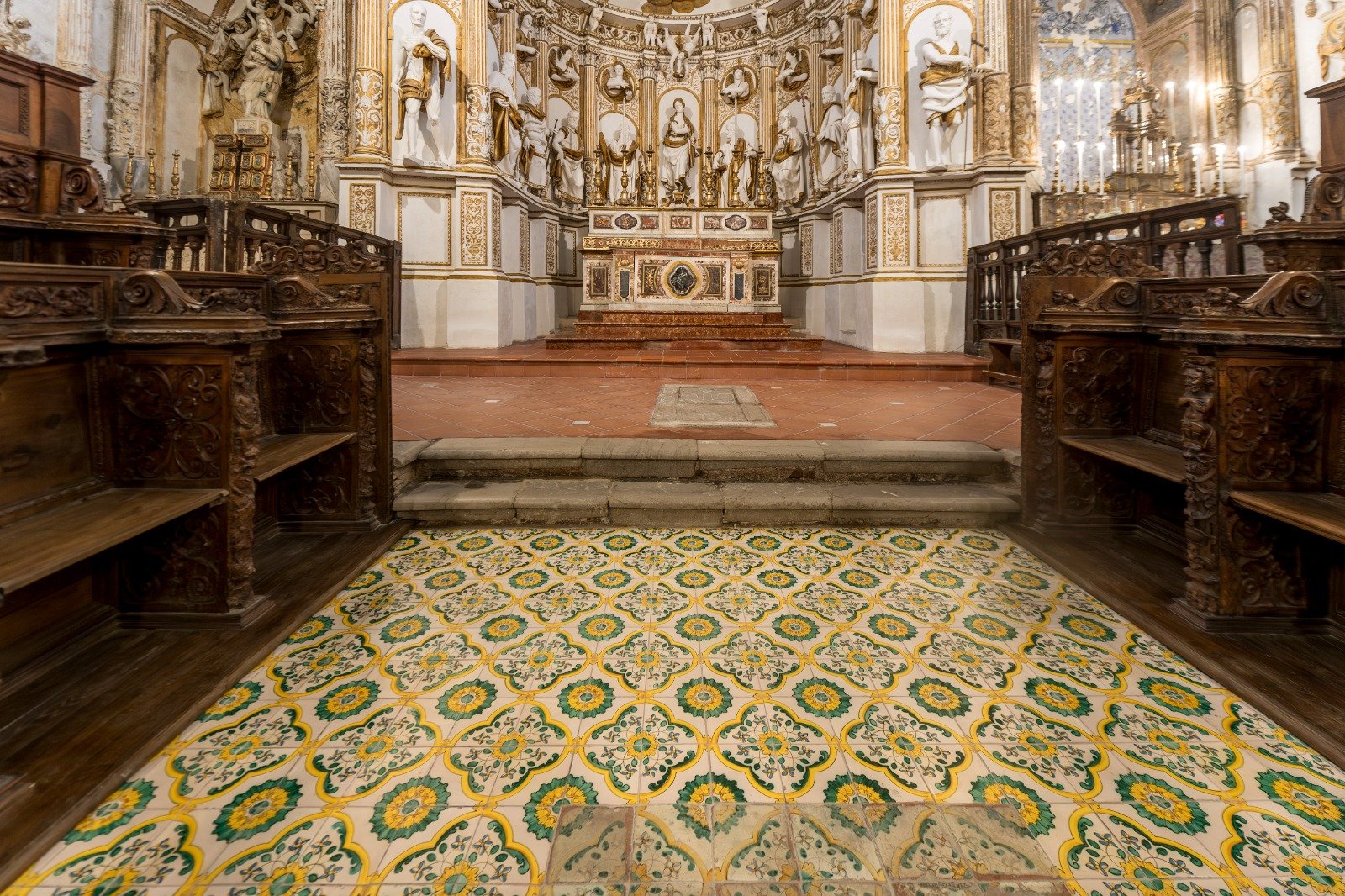
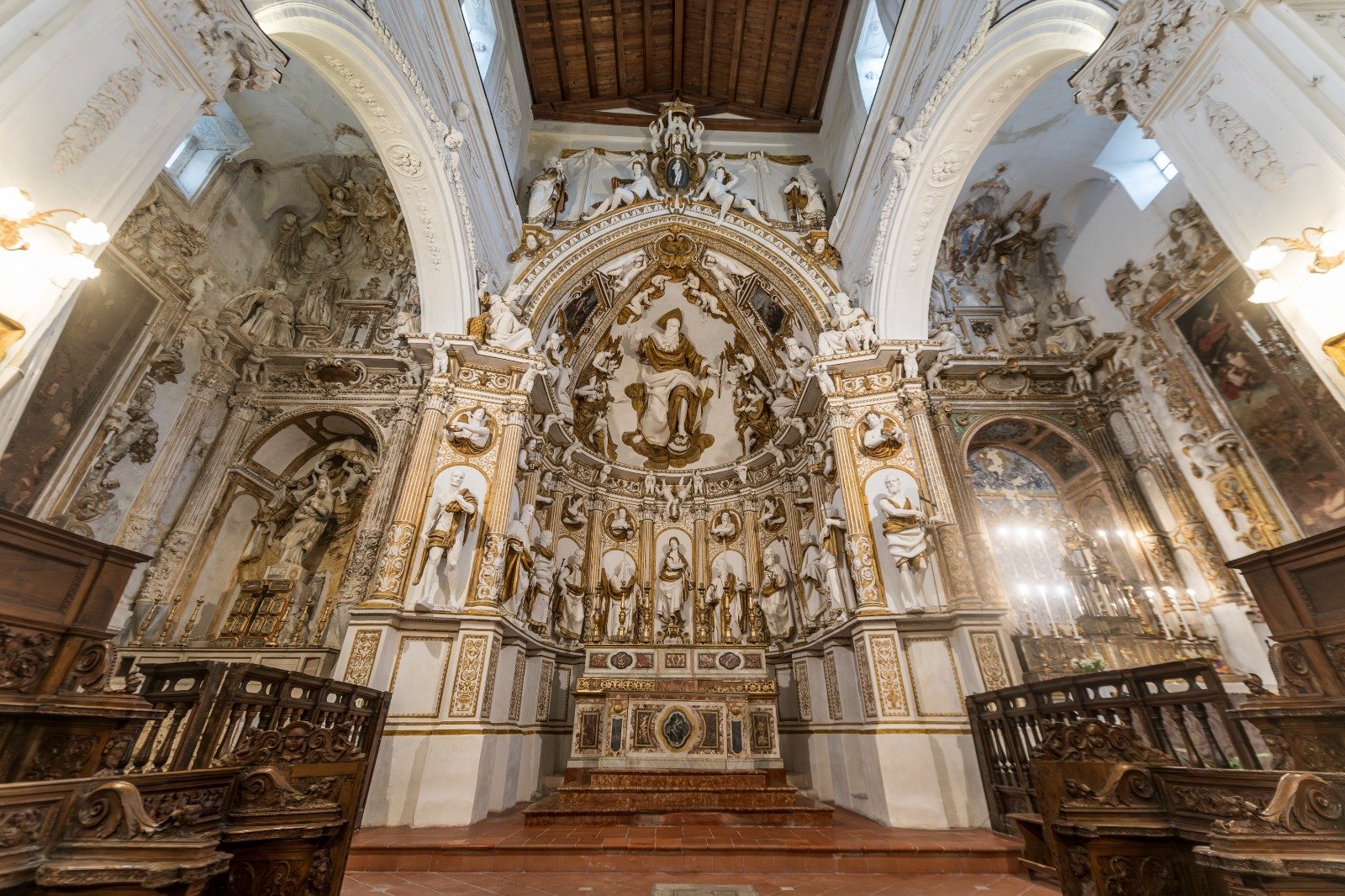
- Apse tribunes: the main tribune, designed by Scipione Li Volsi of Tusa, was completed in 1622 with the collaboration of his brothers Francesco, Paolo, Martino, and Giovan Battista. By 1629, Scipione had executed the stucco decoration of the Chapel of Santa Maria Libera Inferni, followed in 1635 by the symmetrical chapel dedicated to the Blessed Sacrament.
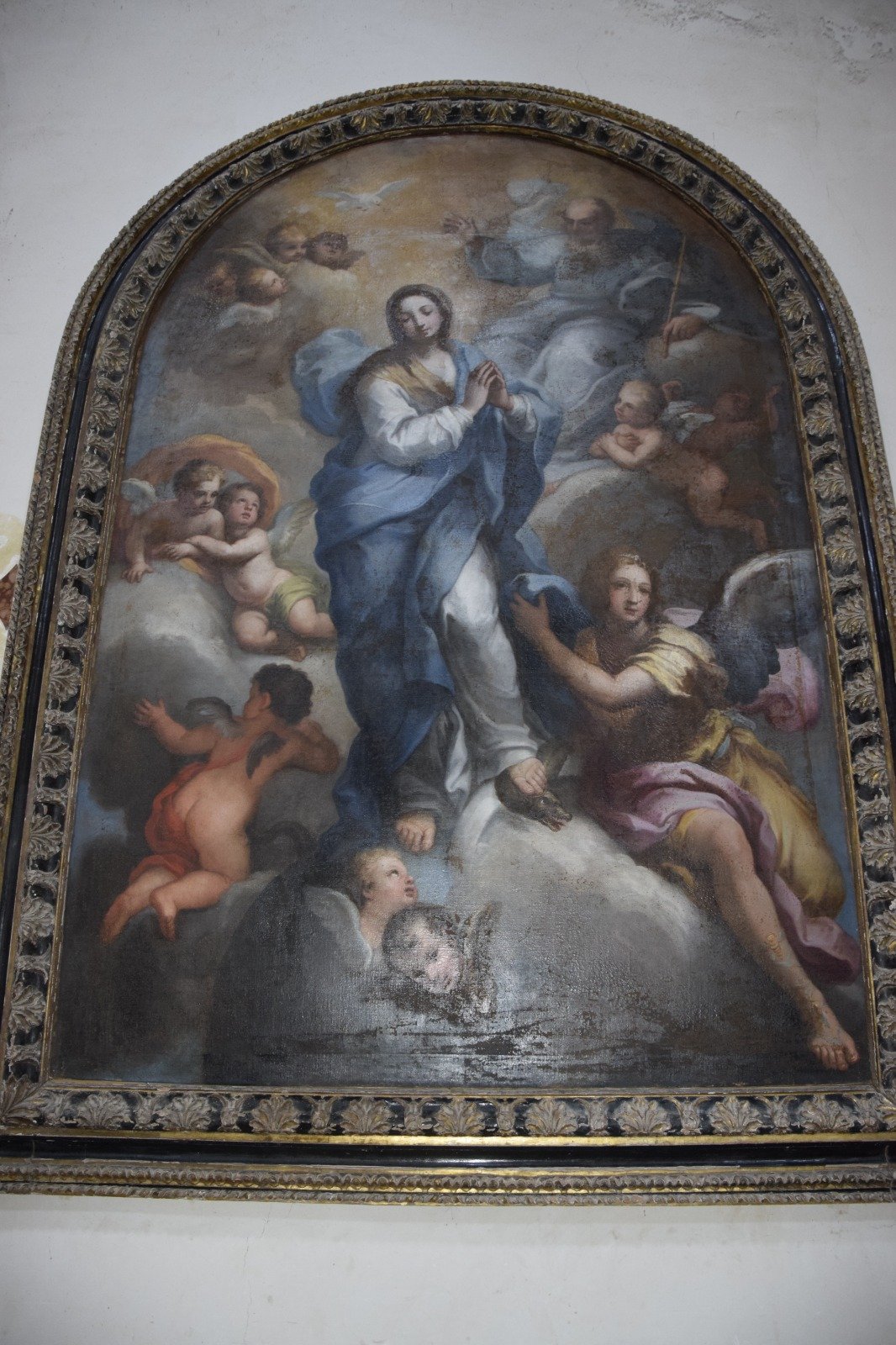
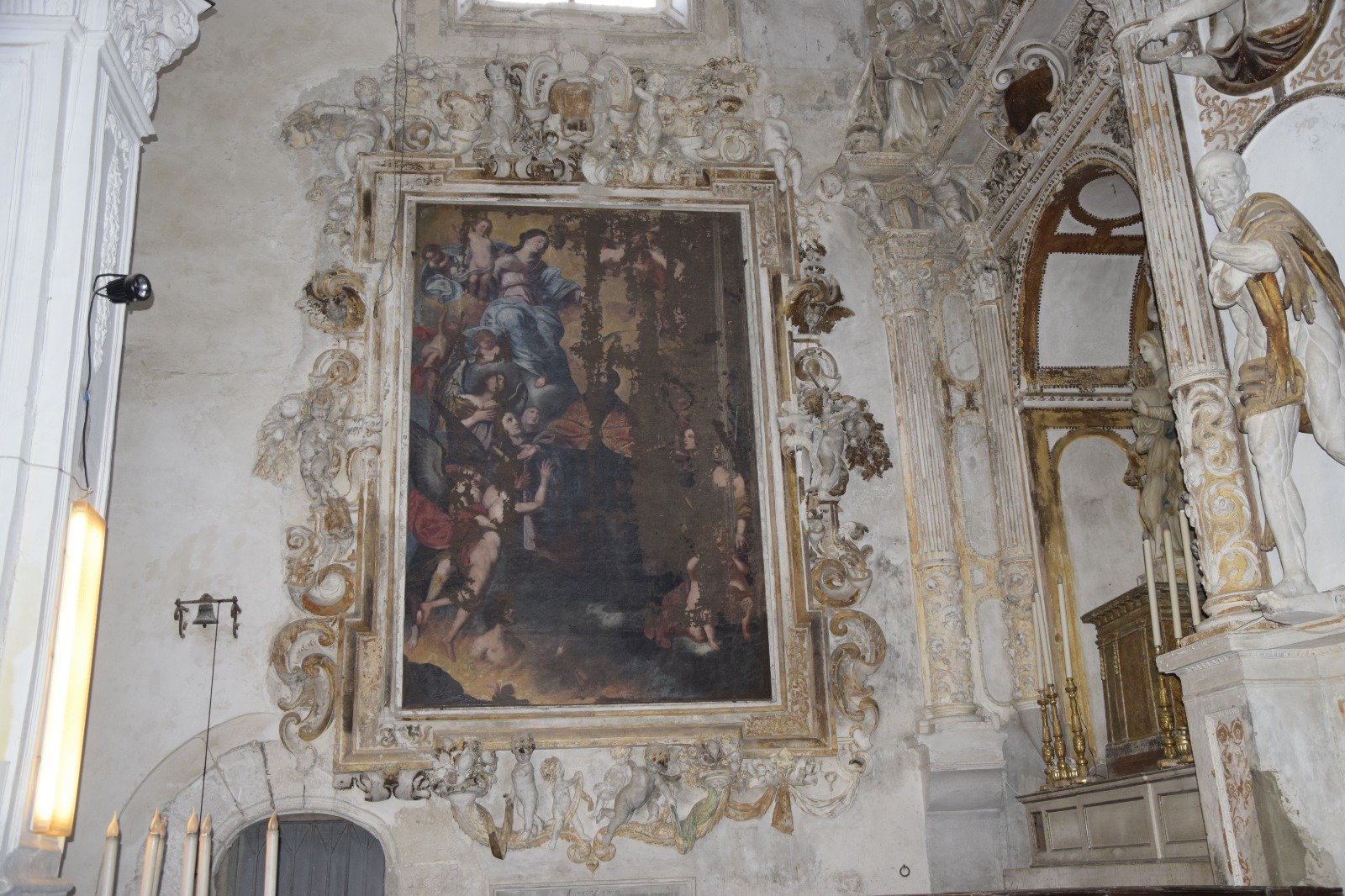
- Continuing the decorative scheme of the apse are two monumental stucco frames. Beside the Chapel of Santa Maria Libera Inferni is the painting The Privilege of Saint Gregory the Great, attributed by its partially preserved inscription to Don Francesco Gigante. The inscription below dates to 1680, while the frame itself—also completed that year—is attributed to Don Paolo Amato for its design and to Gaspare Serpotta for its stucco work.
- Beside the Chapel of the Blessed Sacrament hangs The Ten Thousand Martyrs, a painting dated 1669 and stylistically attributed to Don Francesco Gigante.
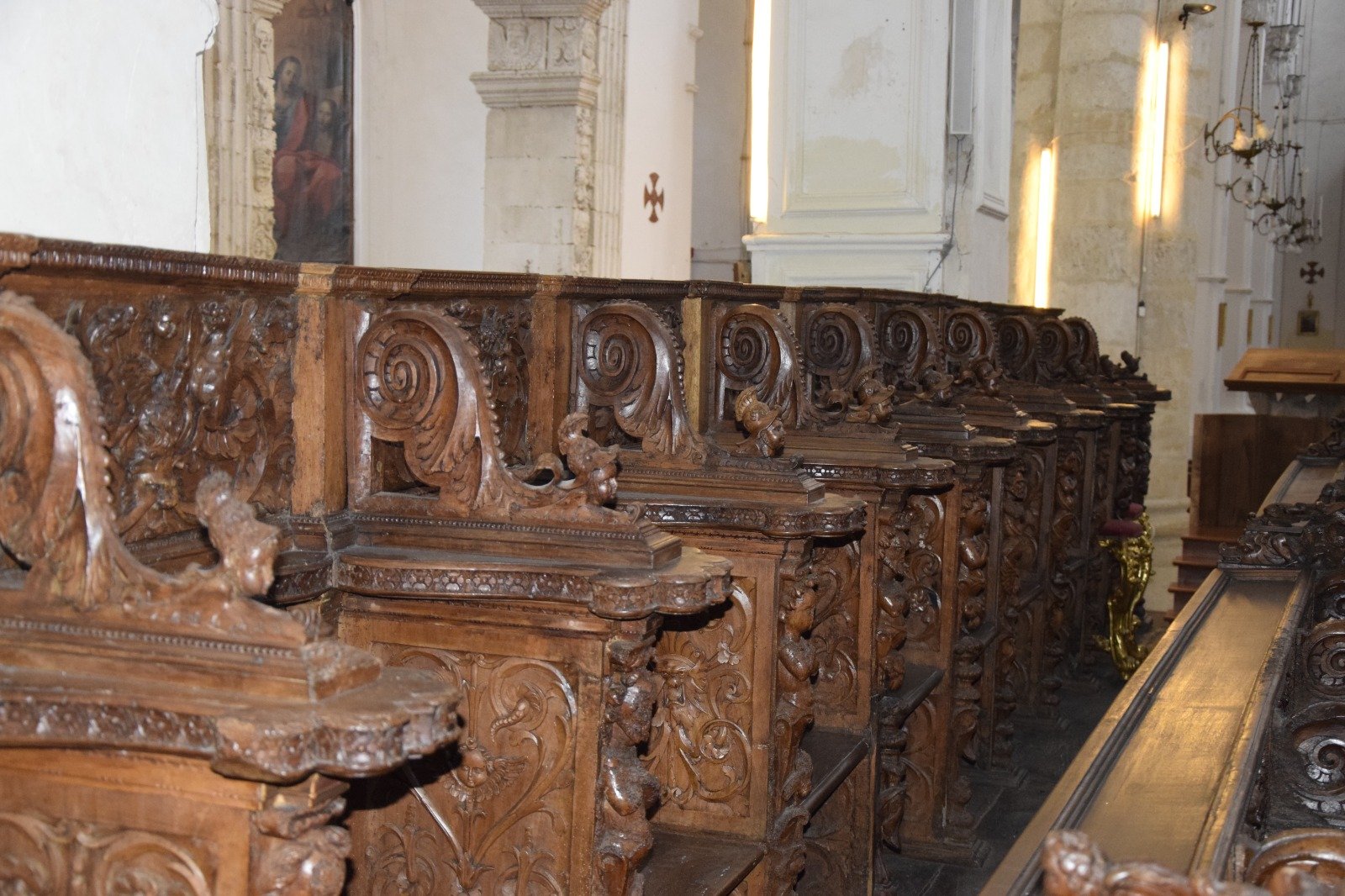
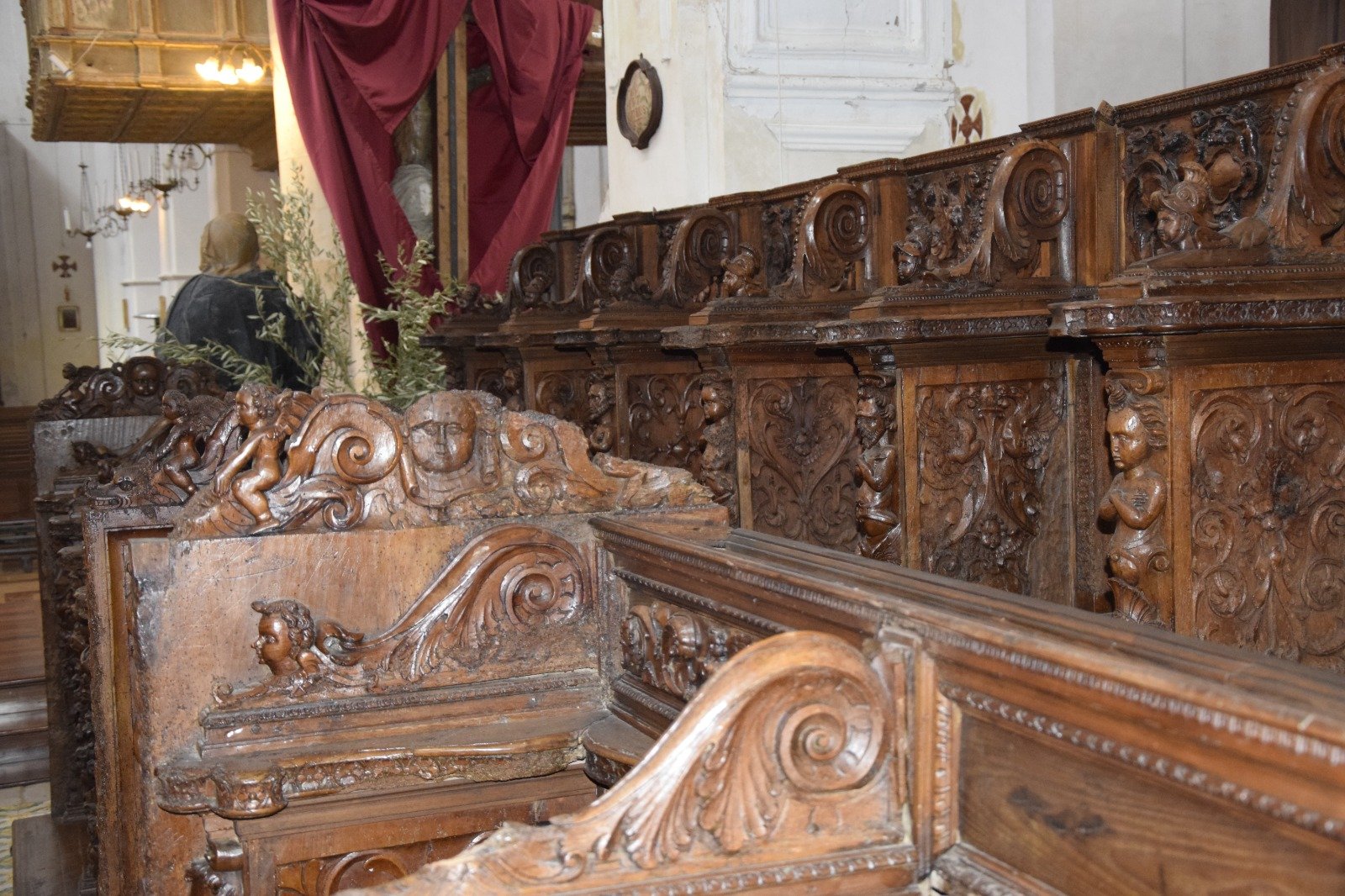
- Wooden choir stalls: created between 1614 and 1619 from a design by the Palermo master Giuseppe Dattolino and carved by the local craftsman Francesco Amari.
- The Spasimo of Sicily (oil on canvas), by the Dutch painter Simone Wobreck, last quarter of the 16th century.
- Dormitio Virginis (oil on canvas), by the Termini-born painter Vincenzo La Barbera, c. 1611.
- Polyptych of the Blessed Sacrament (gilded marble), attributed to Vincenzo Gagini, c. 1591.
- Santa Maria Libera Inferni (painted and gilded marble), by the sculptor Vincenzo Guercio, 1611.
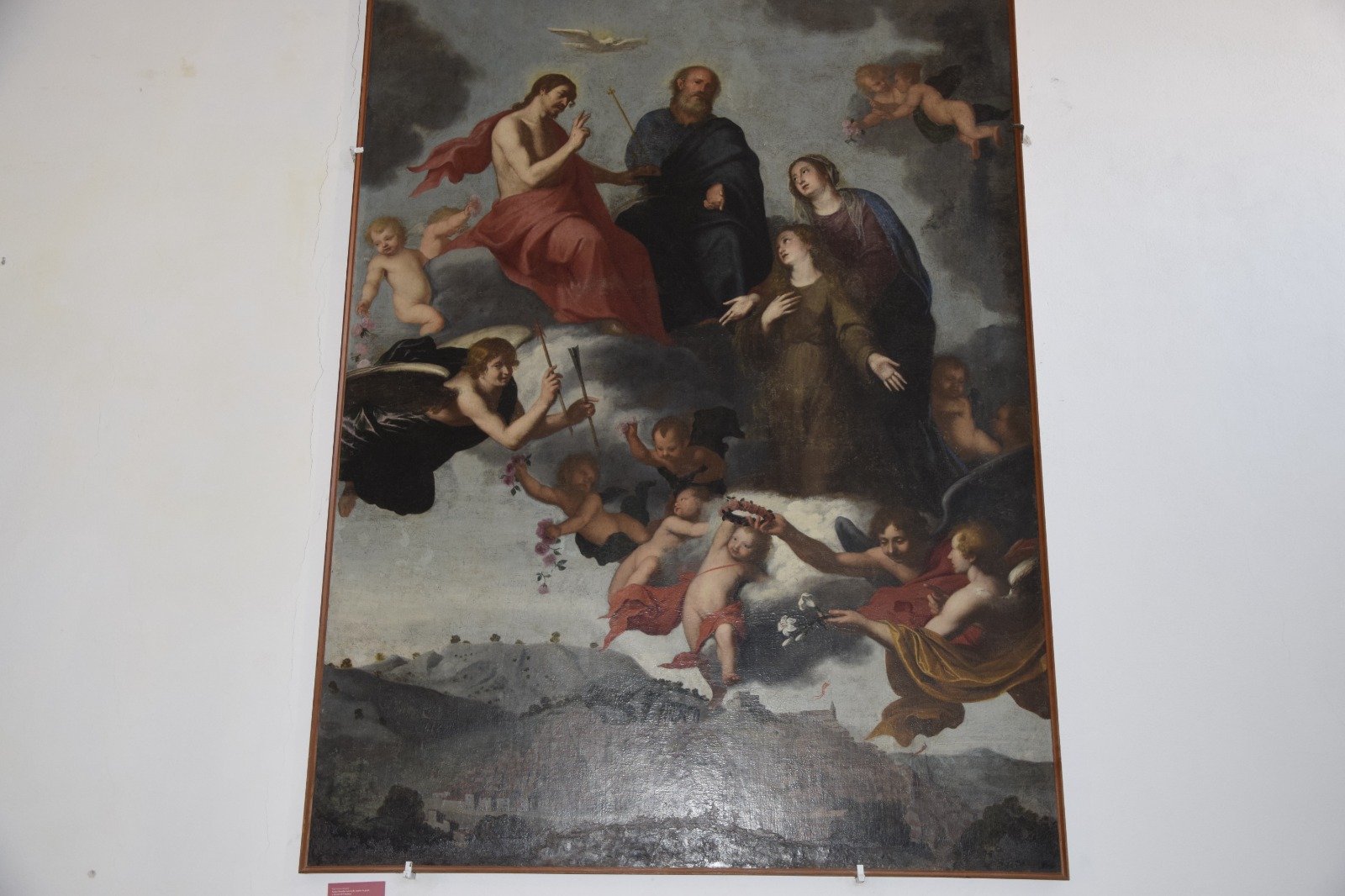
- Saint Rosalia Interceding with the Holy Trinity to Free Ciminna from the Plague (oil on canvas), by the Flemish painter Geronimo Gerardi, 1627.
- The Delivery of the Keys to Saint Peter (oil on canvas), by Vincenzo La Barbera, 1629.
- The Most Holy Name of Jesus (oil on canvas), attributed to Pietro Novelli of Monreale, late first half of the 17th century.
- The Apparition of the Archangel Michael to Saint Mary Magdalene, attributed to Don Francesco Gigante, 1671.
- Saints Simon and Jude (oil on canvas), by the Ciminna-born painter Melchiorre Di Bella, 1765.
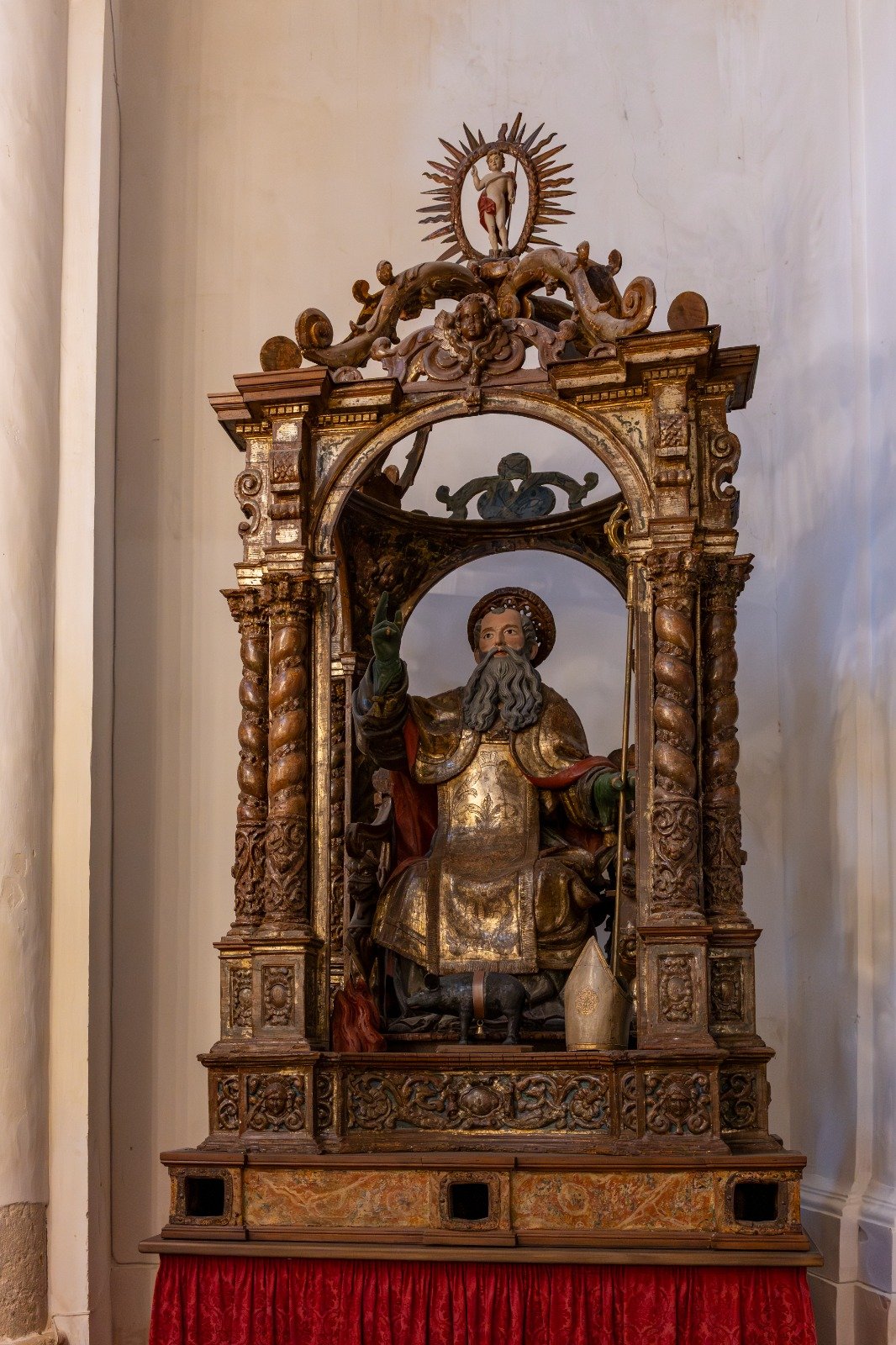
- Saint Andrew the Apostle (polychrome wood), a copy of the marble sculpture in Saint John Lateran, by the sculptor Filippo Quattrocchi of Gangi, 1791.
- Saint Benedict in Glory (oil on canvas), signed by the painter Filippo Randazzo, 18th century.
Inside the sacristy there is an interesting collection of portraits of priests and archpriests, including several works by the Cimmina-born artist and cleric Father Pasquale Sarullo. In addition to this picture gallery, the sacristy houses the Parish Museum, which preserves remarkable liturgical furnishings, eighteenth-century sacred vestments and precious choir books illuminated by Don Santo Gigante. In 1962, the church was used as a filming location for some scenes of Luchino Visconti’s masterpiece “The Leopard”.
PHOTO GALLERY